Aluminum Wrench Design
Course ProjectDesigned and manufactured a lightweight aluminum wrench optimized through by-hand analysis and finite element validation to meet strict torque, weight, and bending constraints.
Final project poster summarizing design requirements, analysis, iteration, and testing.
What This Poster Shows
- Problem definition and design constraints
- Initial concepts and manufacturability considerations
- By-hand stress analysis and assumptions
- Finite element analysis (ANSYS) validation
- Iterative geometry refinement
- Final manufacturing and testing outcomes
Problem & Constraints
Design a lightweight aluminum wrench capable of applying 280 in-lb of torque to a ¼" hex bolt while being machined entirely from a fixed aluminum bar stock and incorporating an additional functional feature.
- Fixed stock size: 1.25" × 0.25" × 8"
- Target weight: ≤ 1.15 oz
- Required to pass a three-point bend test
- Required to perform a functional torque test
- Manual machining only
Concept Generation
Multiple early design concepts were explored to balance weight reduction, stress distribution, and manufacturability. Concepts were evaluated based on geometric simplicity, stress concentration locations, and ease of machining. An open-head design with an integrated pry bar was selected due to its functionality and manufacturability.
By-Hand Analysis
By-hand stress analysis was performed to identify the critical stress locations under applied torque. The maximum bending stress was predicted to occur at the fillet between the wrench head and handle. Stress concentration factors and conservative loading assumptions were used to guide initial dimensioning.
Increasing the head length shifts the stress concentration away from the applied torque, enabling material reduction while maintaining stiffness and factor of safety.
Finite Element Analysis
Finite element analysis was conducted in ANSYS to validate analytical predictions and refine the design. The wrench geometry was modeled in CAD and analyzed under applied loading to identify stress distributions and verify critical stress locations.
- Material: 6061-T6 Aluminum
- Peak stress aligned with analytical predictions
- FEA results guided material removal in low-stress regions
Iteration & Optimization
The wrench geometry was iteratively refined by removing material from low-stress regions identified through FEA while preserving bending stiffness. Slot geometry and fillet transitions were adjusted to balance weight reduction and structural integrity.
Manufacturing
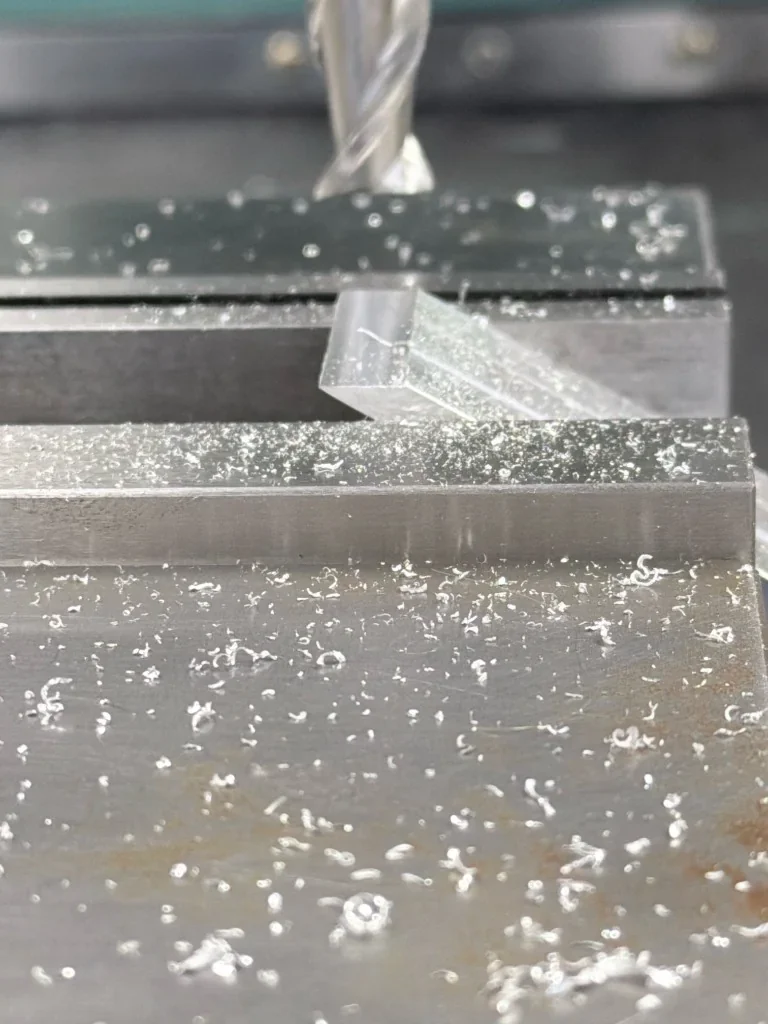
- Stock preparation using manual cutting
- Milling to final profile and dimensions
- Slot machining and jaw formation
- Chamfering and edge finishing
- Final sandblasting for deburring
Testing & Results
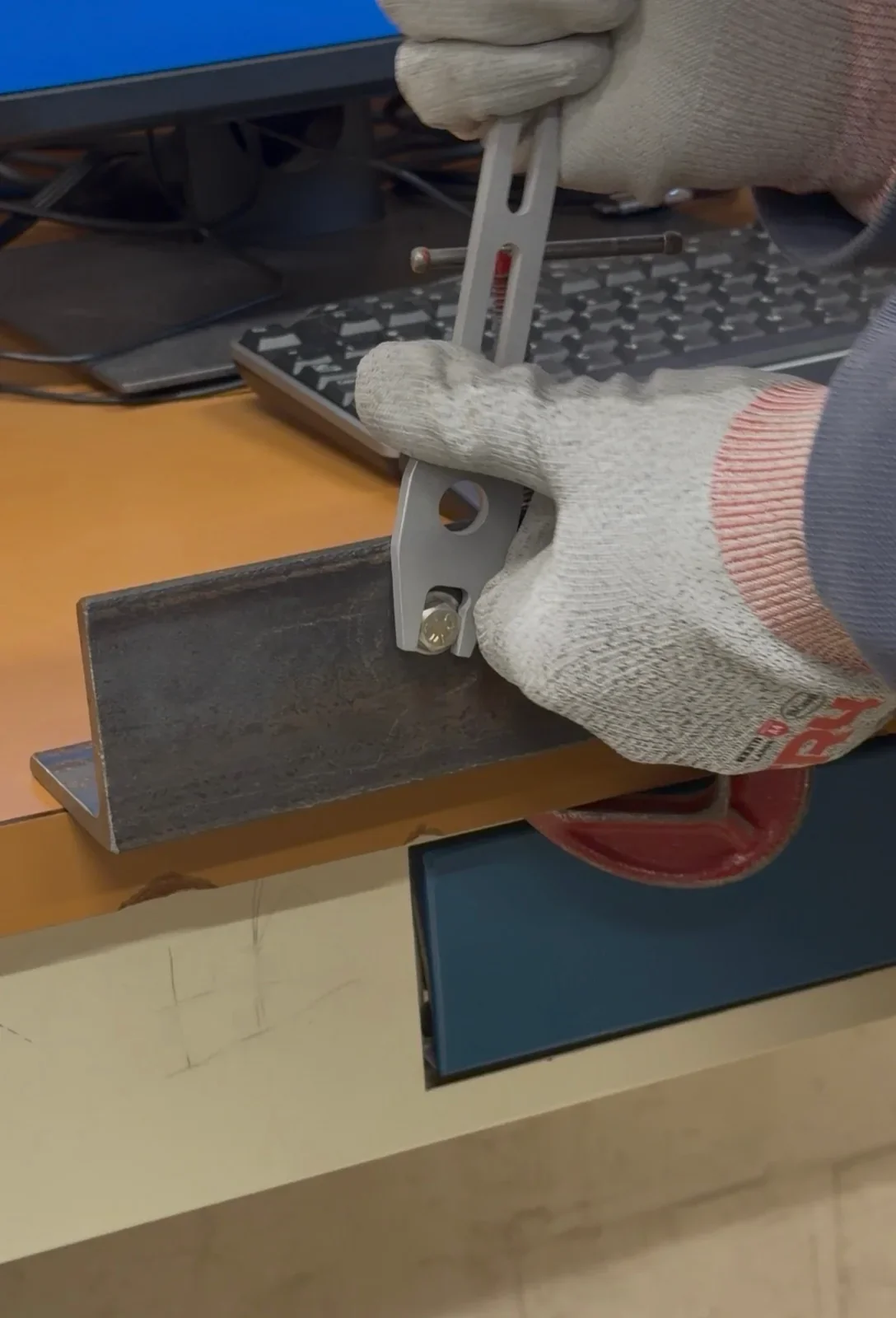
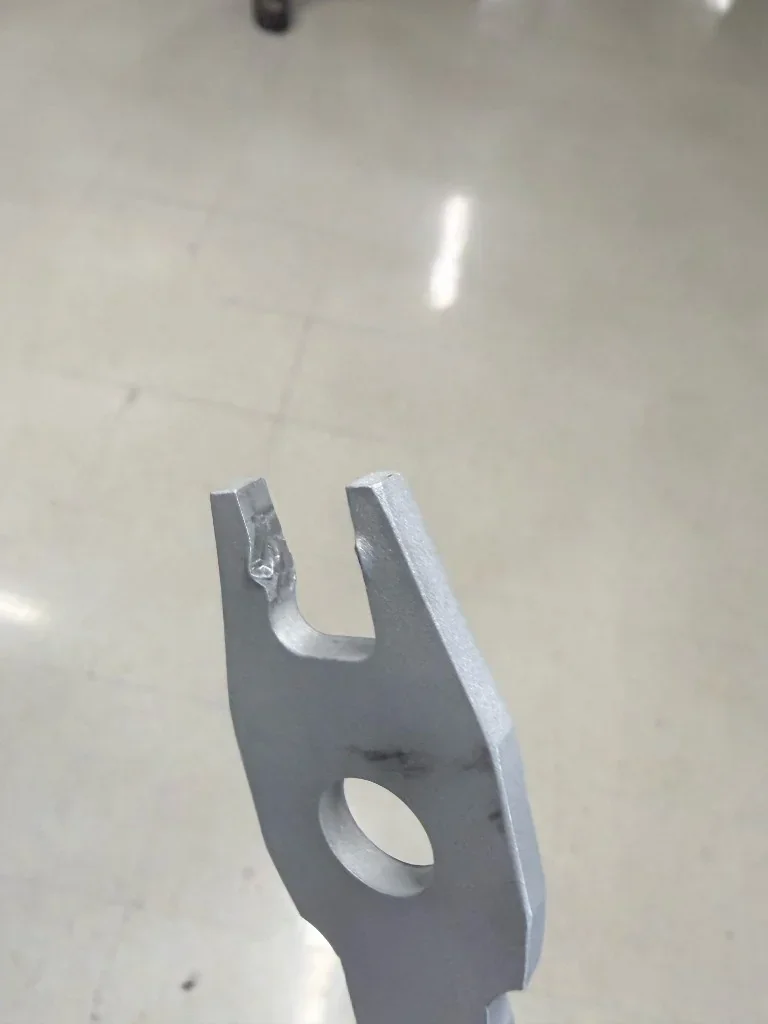
The final design met weight and bending requirements but failed the functional torque test due to jaw deformation. This highlighted the importance of contact geometry and tolerance control in high-load interfaces.
Takeaways & Next Steps
- By-hand analysis and FEA effectively guided weight reduction
- Handle optimization was successful
- Head geometry became the limiting factor
- Future improvements include closed-head geometry, improved jaw tolerances, and contact-based FEA modeling